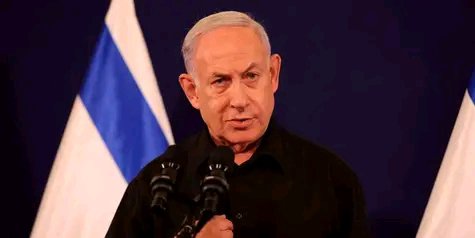
In a resolute declaration, Israeli Prime Minister Benjamin Netanyahu has stated that Israel’s war on Gaza will persist even after a potential ceasefire and a proposed prisoner swap. Netanyahu emphasized, “I would like to clarify, we are at war and we will continue to fight until we reach all our goals,” underscoring a determination to pursue military objectives beyond the prospect of a cessation of hostilities.
The Prime Minister has sought the support of his government for a deal that would pave the way for the release of captives taken by the Palestinian resistance group, Hamas, during an October 7 blitz in southern Israel. This move suggests a willingness on Israel’s part to engage in negotiations, albeit within the context of an ongoing military campaign.
The complexity of the situation is further highlighted by the Israeli public broadcaster KAN’s report, indicating that the army intends to use any potential truce to reorganize its forces. This strategic maneuver is seen as preparation for an expansion of the ground operation into southern Gaza, suggesting that Israel is positioning itself for a sustained and potentially escalated military engagement.
The announcement by Prime Minister Netanyahu signals a departure from the conventional expectation that ceasefires typically mark the end of hostilities. Instead, it reflects a commitment to pursuing military objectives and maintaining pressure on the opposing forces even during diplomatic discussions.
The proposed deal for the release of captives adds a layer of negotiation to the multifaceted conflict, indicating that both military and diplomatic channels are actively being pursued by Israel. The intricate interplay between military strategy and diplomatic efforts underscores the gravity of the situation and the complex dynamics at play in the ongoing conflict between Israel and Hamas.
As the conflict continues, the international community watches closely, cognizant of the potential humanitarian impact and the broader regional implications of an extended military campaign. The evolving situation in Gaza raises questions about the effectiveness of diplomatic initiatives amid ongoing military operations and the challenges of achieving a lasting resolution in the midst of heightened tensions.
Prime Minister Netanyahu’s declaration that Israel’s war on Gaza will persist beyond potential ceasefire talks underscores a strategic shift in the approach to the conflict. The intertwining of military and diplomatic efforts indicates a nuanced and multifaceted strategy, with implications for the trajectory of the conflict and the prospects for a comprehensive resolution in the region. As events unfold, the delicate balance between military objectives and diplomatic initiatives will shape the course of developments in this complex and fraught geopolitical landscape.

 e.news
Leave a comment