In a significant development, Afghanistan’s Taliban government declared on Friday that China has formally accepted its ambassador to Beijing, marking what they described as an “important chapter” in the evolving relationship between the two neighboring nations. If confirmed, this move would make China the first country to host a Taliban ambassador since the group regained power from the American-backed government in Kabul two years ago.
The announcement comes at a crucial juncture, as Afghanistan’s diplomatic status remains in flux. Despite the Taliban’s control on the ground, no country, including China, has officially recognized the de facto Afghan administration. This lack of recognition adds complexity to the international dynamics surrounding Afghanistan, leaving the country in a state of political ambiguity.
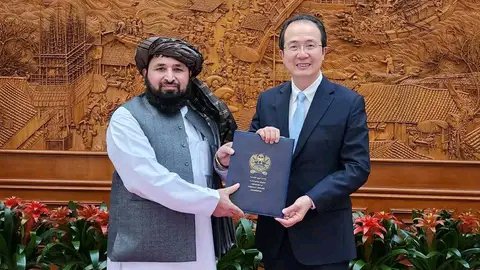
The potential acceptance of a Taliban ambassador by China raises questions about the motivations and implications of such a diplomatic move. China has traditionally maintained a pragmatic approach to foreign relations, emphasizing non-interference in the internal affairs of other nations. The decision to host a Taliban ambassador could be seen as a pragmatic step, acknowledging the ground realities in Afghanistan and laying the groundwork for diplomatic engagement.
For Afghanistan, having an ambassador in Beijing is not only symbolic but also strategic. It signals an attempt by the Taliban to cultivate international legitimacy and establish diplomatic ties beyond its immediate region. This move could potentially pave the way for economic cooperation and Chinese investments in Afghanistan, providing much-needed resources for the war-torn nation’s reconstruction.
However, the lack of formal confirmation from China underscores the delicate nature of this geopolitical development. China, like many other nations, is likely treading cautiously, evaluating the implications of recognizing the Taliban-led government. The international community remains divided on how to engage with Afghanistan, balancing the need for humanitarian assistance with concerns about the Taliban’s human rights record and governance.
As Afghanistan seeks international recognition, it faces the challenge of convincing the global community that it can govern responsibly and address the pressing issues within its borders. The potential acceptance of a Taliban ambassador by China may prompt other nations to reassess their diplomatic approach to Afghanistan, potentially influencing the trajectory of international relations in the region.
In conclusion, the announcement of China potentially accepting a Taliban ambassador marks a significant development in the evolving diplomatic landscape of Afghanistan. As the international community navigates the complexities of engaging with the Taliban-led government, the implications of such a move by China will undoubtedly shape the future dynamics of regional and global relations with Afghanistan.

 e.news
Leave a comment