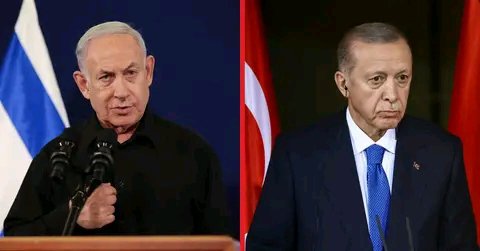
Turkish President Erdogan, in a stark address at a World Human Rights Day event in Istanbul, has voiced his disillusionment with the UN Security Council, declaring, “We have lost our hope and expectation from the UN Security Council.” Erdogan’s remarks come in the wake of the Council’s inability to broker a ceasefire in Gaza and the absence of action towards the arrest of Israel’s Prime Minister, Benjamin Netanyahu.
The Turkish President’s statement underscores growing frustration within the international community regarding the effectiveness of the UN Security Council in addressing urgent humanitarian concerns. Erdogan’s comments highlight a perception that the Council’s role in promoting peace and safeguarding human rights is falling short, particularly in the context of the ongoing conflict in Gaza.
The failure to secure a ceasefire in Gaza, despite widespread calls for immediate intervention, has raised questions about the UN Security Council’s ability to act swiftly in the face of escalating crises. Erdogan’s loss of hope reflects a sentiment shared by many who believe that the Council must evolve to meet the demands of the contemporary world, where the consequences of conflicts are felt by innocent civilians.
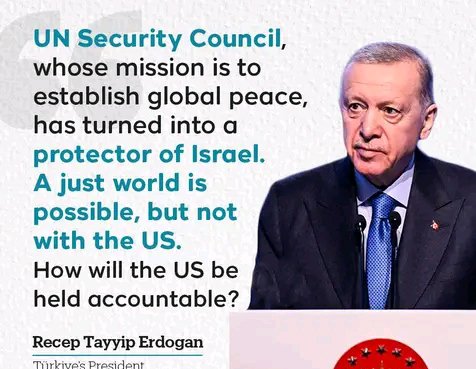
Furthermore, Erdogan’s explicit mention of the “Butchers of Gaza” and his assertion that they will be held accountable sooner or later adds a layer of geopolitical tension to the discourse. The call for accountability aligns with widespread international concern over the human rights situation in Gaza, where civilian casualties continue to mount amid the ongoing conflict.
The Turkish President’s strong stance extends beyond expressing discontent with the UN Security Council’s perceived shortcomings. By referencing the potential accountability of those deemed responsible for the violence in Gaza, Erdogan introduces a dimension of accountability and justice into the ongoing narrative. This signals a determination to pursue avenues beyond the traditional diplomatic channels in addressing the crisis.
Erdogan’s address also includes a direct call for the arrest of Israel’s Prime Minister, Benjamin Netanyahu. This demand adds a new layer of complexity to the geopolitical landscape, as it raises questions about the feasibility and implications of such a move. The call for Netanyahu’s arrest serves as a symbol of the deep-seated tensions surrounding the Israeli-Palestinian conflict and the desire for accountability at the highest levels.
In conclusion, Turkish President Erdogan’s candid remarks at the World Human Rights Day event reflect a growing frustration with the UN Security Council’s perceived limitations in addressing urgent humanitarian issues. The call for accountability and the demand for the arrest of Israel’s Prime Minister highlight the multifaceted challenges surrounding the Gaza conflict. As the international community grapples with these complexities, Erdogan’s statements serve as a poignant reminder of the pressing need for diplomatic innovation and a renewed commitment to human rights on the global stage.

 e.news
Leave a comment