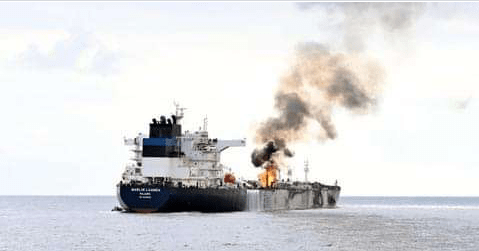
In a recent development, Yemen’s Houthi rebels claimed responsibility for a targeted operation on the British oil tanker Marlin Luanda in the Gulf of Aden. The attack resulted in a fire aboard the vessel, marking a significant escalation in the ongoing conflict in the region.
The Houthi assault on an oil tanker off the coast of Yemen highlights the challenges faced by the British-American strategy aimed at deterring and degrading the Houthi threat. Despite concerted efforts by the USA and Britain, with support from countries such as Canada and Australia, to curb Houthi activities, the recent attack underscores potential shortcomings in the existing approach.
The Gulf of Aden has been a hotspot for maritime tensions, with geopolitical interests intersecting amidst ongoing conflicts in the region. The Houthi rebels, known for their control over strategic areas, have continually posed a challenge to international efforts aimed at stabilizing Yemen.
The targeted attack on the British oil tanker Marlin Luanda reveals the Houthis’ determination to disrupt maritime activities in the region, posing a direct threat to global energy security. The fire resulting from the operation further intensifies concerns about the safety of maritime transport in these crucial waters.
The British-American strategy, which includes military interventions and strikes against Houthi positions, appears to face hurdles in effectively curbing the rebel group’s capabilities. The Houthi rebels, fueled by their own motivations and external support, continue to find ways to assert their influence in the region, challenging the established order.
The involvement of the USA and Britain, with collaborative efforts from allied nations, reflects the international community’s commitment to preventing further Houthi aggression. However, the recent attack on the oil tanker suggests that a reassessment of the current strategy may be necessary to address the evolving nature of the conflict.
As tensions escalate, diplomatic efforts must also play a crucial role in finding a sustainable solution to the Yemen crisis. The international community, including the United Nations, needs to redouble its efforts to facilitate dialogue and negotiations, seeking a path towards a peaceful resolution that addresses the root causes of the conflict.
In conclusion, the Houthi attack on the British oil tanker Marlin Luanda in the Gulf of Aden underscores the complexity of the situation in Yemen and the challenges faced by the British-American strategy. As the international community grapples with the implications of this escalation, a comprehensive and multi-faceted approach, combining military and diplomatic efforts, may be crucial in finding a lasting solution to the Yemen crisis.

 e.news
Leave a comment