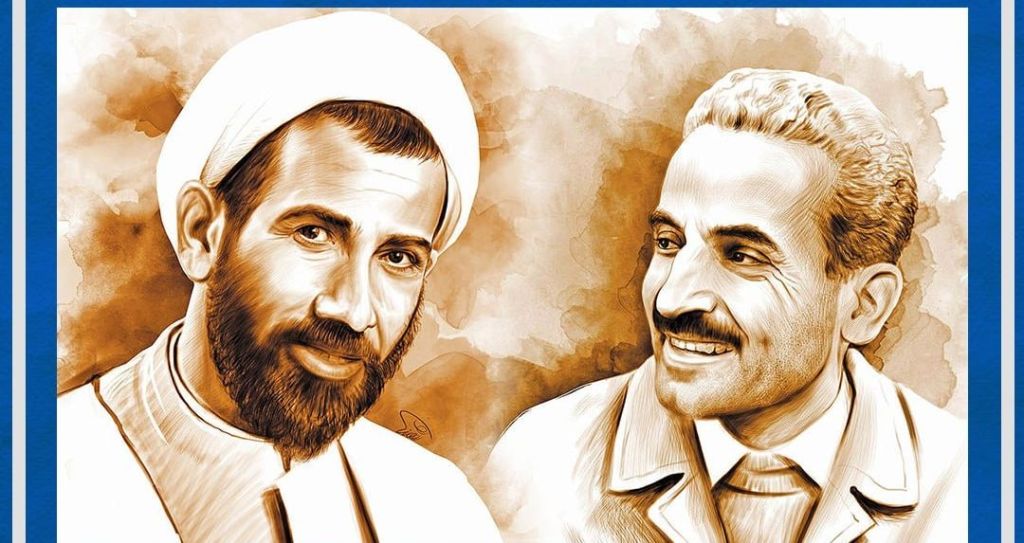
On August 30, 1981, Iran witnessed one of the most devastating acts of political violence in its modern history. President Mohammad Ali Rajaei, Prime Minister Mohammad Javad Bahonar, and six other high-ranking officials were assassinated in a bomb blast orchestrated by the Mojahedeen-e Khalq (MKO), a militant group that had grown increasingly hostile to the Islamic Republic following the 1979 Revolution.
The attack took place in the heart of Tehran, at the headquarters of the Prime Minister’s office. As President Rajaei, Prime Minister Bahonar, and other top officials gathered for a routine meeting, a powerful explosion ripped through the building, killing them instantly. The shockwave of this terrorist act reverberated throughout Iran, plunging the nation into mourning and highlighting the ongoing internal threats faced by the fledgling Islamic Republic.
President Rajaei and Prime Minister Bahonar: Leaders of the Revolution
Mohammad Ali Rajaei, a dedicated revolutionary and a key figure in the establishment of the Islamic Republic, had only been elected President a few weeks prior to the attack. Rajaei was known for his humble background and commitment to the principles of the Islamic Revolution. He had previously served as Prime Minister before assuming the presidency, where he sought to strengthen the newly formed government amid external and internal pressures.
Mohammad Javad Bahonar, who succeeded Rajaei as Prime Minister, was a cleric and a staunch supporter of Ayatollah Khomeini. Bahonar was an influential figure in shaping the Islamic educational system in post-revolutionary Iran and was deeply involved in the ideological framework of the new government. His appointment as Prime Minister reflected his deep commitment to the revolutionary ideals and his strong opposition to anti-revolutionary elements.
The MKO: From Allies to Adversaries
The Mojahedeen-e Khalq (MKO) was initially aligned with the Islamic Revolution, but ideological differences and a struggle for power soon led to a split between the MKO and the new Islamic government. The MKO, which had adopted a mixture of Marxist and Islamic ideologies, became increasingly disillusioned with the direction of the revolution and its leadership under Ayatollah Khomeini. As tensions escalated, the MKO turned to armed resistance and terrorism to challenge the government, leading to a series of violent confrontations.
The assassination of Rajaei and Bahonar marked one of the most significant attacks carried out by the MKO, signaling the group’s transition from a political opposition movement to a terrorist organization. The MKO sought to destabilize the government by targeting its highest officials, hoping to create a power vacuum that could be exploited to their advantage.
A Nation in Mourning
The loss of President Rajaei and Prime Minister Bahonar was a heavy blow to the Islamic Republic, which was still consolidating its power and navigating the complex aftermath of the revolution. The assassinations were intended to sow chaos and undermine the government’s authority, but they instead galvanized public support for the regime. The nation united in grief, and the tragic events of August 30 became a symbol of the sacrifices made to preserve the revolution.
In the aftermath of the attack, the Iranian government launched a widespread crackdown on the MKO and other dissident groups. The MKO was officially designated as a terrorist organization, and its members were pursued relentlessly by the government. Over time, the MKO lost much of its influence and support within Iran, eventually relocating its operations abroad.
Legacy of Resistance
The assassination of Rajaei and Bahonar is remembered each year in Iran as part of “Government Week,” a period dedicated to honoring the service and sacrifice of public officials. The attack serves as a stark reminder of the challenges faced by the Islamic Republic in its early years, as well as the resilience of its leadership in the face of violence and adversity.
The legacy of President Rajaei and Prime Minister Bahonar lives on in Iran, where they are celebrated as martyrs of the revolution. Their deaths underscored the high stakes of the political struggle in post-revolutionary Iran and the ongoing battle against those who sought to undermine the new government.
The events of August 30, 1981, continue to resonate in the collective memory of the Iranian people, symbolizing both the vulnerability and the enduring strength of the Islamic Republic.
Follow me on Instagram.

 e.news
Leave a comment