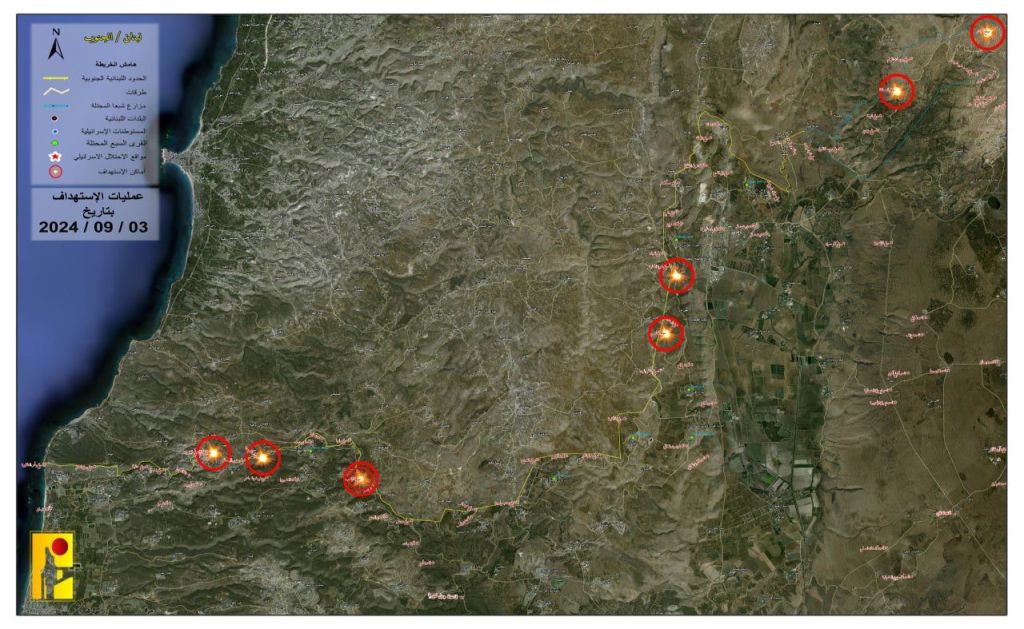
On September 3, 2024, Hezbollah launched a series of coordinated attacks against Israeli military positions and personnel in the contested border regions of southern Lebanon and northern Israel. This escalation marks a significant increase in hostilities, with multiple targets hit throughout the day, reflecting the heightened tensions between the two adversaries.
Timeline of the Attacks
1. Al-Jardah Site Targeted at 14:00
The day of hostilities began at 14:00 when Hezbollah forces targeted surveillance equipment at the Al-Jardah site. The attack was conducted using what Hezbollah described as “appropriate weapons,” which typically indicates the use of precision-guided munitions or specialized anti-surveillance weaponry.
2. Al-Raheb Site Attack at 14:10
Just ten minutes later, at 14:10, another strike was launched against surveillance equipment at the Al-Raheb site. The rapid succession of these attacks suggests a coordinated effort to blind Israeli forces and disrupt their intelligence-gathering capabilities in the region.
3. Al-Asi Site Hit at 14:20
Continuing the assault, Hezbollah targeted the Al-Asi site at 14:20. This site, believed to be a strategic Israeli position, was also struck with precision weaponry, further crippling Israeli surveillance and military effectiveness in the area.
4. Samaka Site Assault at 14:55
At 14:55, Hezbollah shifted its focus to Israeli soldiers stationed in the vicinity of the Samaka site, located in Lebanon’s Kfar Shuba. The attack involved the use of “appropriate weapons,” leading to confirmed casualties among the Israeli troops.
5. Artillery Shelling of the Shebaa Radar Site at 15:05
The intensity of the day’s operations escalated at 15:05 when Hezbollah forces targeted the radar site in Lebanon’s Shebaa Farms area with artillery shells. This strike likely aimed to degrade Israeli radar capabilities, which are crucial for monitoring and responding to Hezbollah’s movements.
6. Al-Raheb Site Under Fire Again
Following the artillery barrage on the Shebaa radar site, Hezbollah continued its offensive against the Al-Raheb site, this time targeting Israeli forces stationed there with artillery shells. This repeated targeting indicates the strategic importance of the Al-Raheb site and Hezbollah’s determination to neutralize it.
7. Manara Settlement Military Building Struck
Later in the day, Hezbollah expanded its operations into Israeli territory, targeting a military building in the Manara settlement. The attack resulted in confirmed casualties, marking one of the most significant blows to Israeli forces during the day’s hostilities.
8. Birkat Risha Site Attack at 18:00
The day’s assaults culminated at 18:00 with a targeted attack on Israeli soldiers at the Birkat Risha site. Hezbollah reported confirmed casualties from this strike, further intensifying the day’s toll on Israeli military personnel.
- Kenya’s Security Under Siege: Border Tensions, Internal Cracks, and the Perceived Decline of the KDF
- Sexual Humiliation and Abuse of Palestinian Detainees: The Role of Female Soldiers in Documented and Alleged Case
Implications of the Escalation
The September 3 attacks represent a serious escalation in the ongoing conflict between Hezbollah and Israel. Hezbollah’s ability to conduct multiple, coordinated attacks across several strategic sites within a short timeframe underscores its military capabilities and readiness to engage in prolonged hostilities.
This escalation comes amid an already tense situation in the region, with both sides engaged in a dangerous cycle of retaliation. Hezbollah’s actions are likely intended to send a clear message to Israel, signaling that any aggression will be met with a formidable response.
Potential Consequences
The increased hostilities could potentially draw Lebanon further into conflict, exacerbating the already precarious situation in the region. Israel’s response to these attacks will be closely watched, as any retaliatory strikes could lead to a wider confrontation with severe implications for both countries and the broader Middle East.
The international community, particularly the United Nations and major powers like the United States and Russia, may feel compelled to intervene diplomatically to prevent further escalation. However, with both sides seemingly entrenched in their positions, achieving a lasting ceasefire or peace agreement remains a challenging prospect.
The events of September 3, 2024, mark a significant escalation in the conflict between Hezbollah and Israel, with Hezbollah launching a series of coordinated attacks against Israeli military positions. The aftermath of these actions could have far-reaching consequences, potentially destabilizing the region further and drawing both sides into an even more destructive conflict. As the situation develops, the world watches with growing concern, hoping for a resolution that will prevent further bloodshed.

 e.news
Leave a comment